
Fine hair can look fuller in minutes with the right extension placement, but the wrong set can feel heavy, show through at the roots, or pull on delicate strands. Tape in extensions thin hair shoppers choose should add believable density without asking a small amount of natural hair to carry too much weight. The goal is not the biggest transformation possible. It is comfortable, natural-looking volume that still feels like your own hair.
Why Tape In Extensions Work for Thin Hair
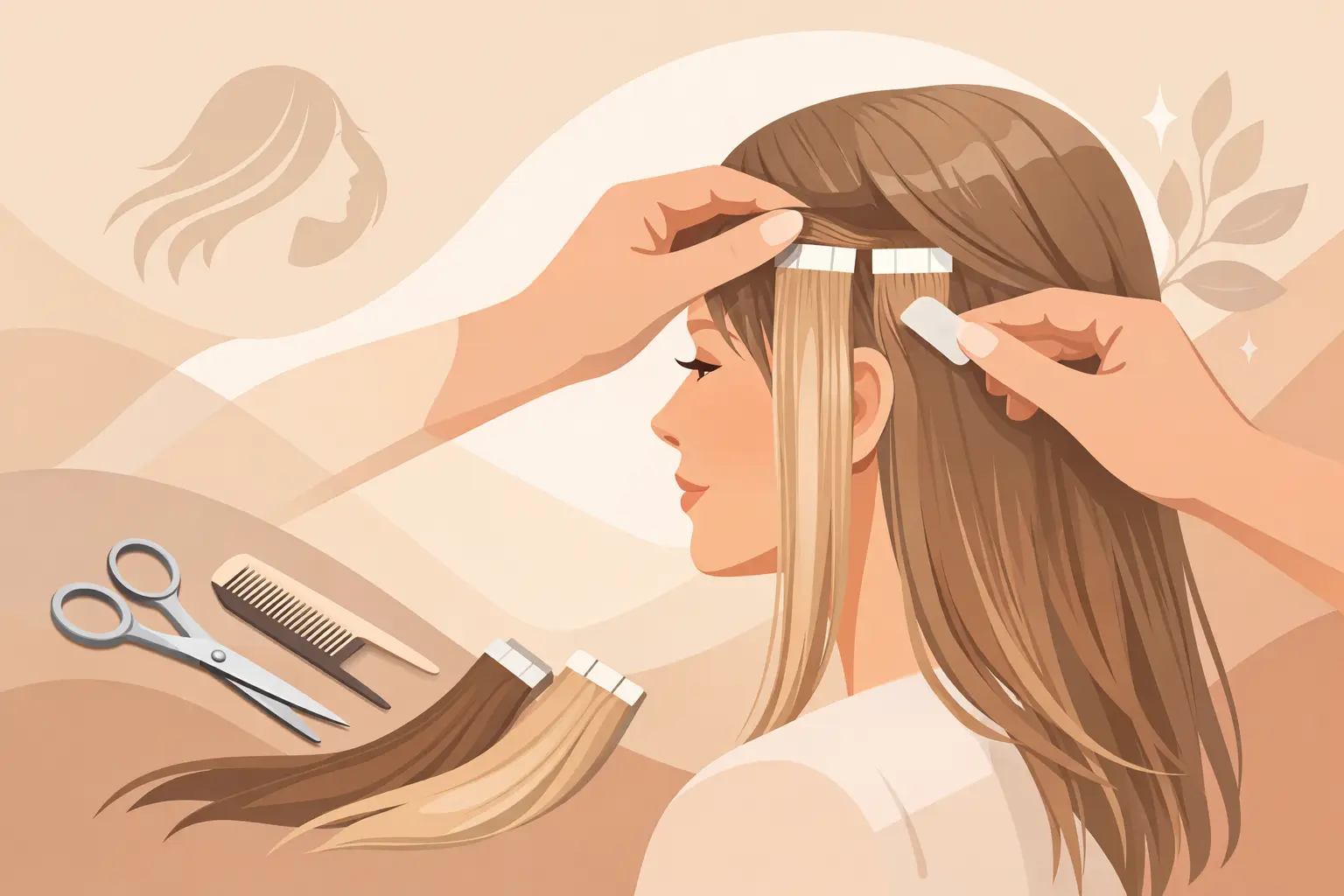
Tape-in extensions sit flat against the head, which makes them a practical choice when you want added fullness without bulky attachment points. Each section is secured between two adhesive tabs, creating a thin, discreet bond that can blend well under fine hair when applied correctly.
Compared with heavier options, tape-ins spread the weight across wider sections. That matters for thin hair because concentrated tension is what can make extensions uncomfortable or create visible pulling at the scalp. A quality Remy human-hair set also moves, styles, and blends more naturally than a stiff synthetic alternative.
Still, tape-ins are not automatically right for every fine-hair situation. If your hair is very sparse, fragile from bleaching, or breaking easily, a consultation with a licensed stylist is the safest first step. Extensions need enough healthy hair to support the adhesive panels. More hair is not worth damaging the hair you already have.
Choosing Tape In Extensions for Thin Hair
The best set is usually lighter and more strategic than shoppers expect. Focus on the specifications that affect comfort and concealment, not just the length shown in product photos.
Start With Weight, Not Maximum Volume
For thin hair, a lighter set often gives the most convincing result. A 40 to 80 gram set can be enough for volume at short to medium lengths, while 80 to 120 grams may suit people who want extra fullness or have longer hair. Very long extensions need more hair to look balanced, but adding too much weight can make thin natural hair look separated at the roots.
If your priority is volume rather than dramatic length, choose a length close to your current hair. Extensions that are only a few inches longer blend more easily and require less product, heat styling, and cutting to look natural.
Look for Small, Flexible Tape Tabs
Wide tape tabs can be secure, but they need enough hair above them to stay hidden. Smaller or standard-width tabs are generally easier to place around a fine-hair perimeter without showing through. The adhesive should lie flat and feel flexible, not thick or rigid.
Avoid placing bonds too close to the hairline, part line, or temples. Those areas tend to have the least density and the greatest movement. A skilled installer leaves enough natural hair over every panel so the tapes stay covered when you part your hair, wear a ponytail, or let the wind move it.
Choose Remy Human Hair for Better Blending
Remy human hair is a strong choice when you plan to curl, straighten, or wear your extensions regularly. The cuticles are aligned in the same direction, helping the hair stay smoother and reducing the tangling that can make fine hair look rough or overly layered.
Human hair also lets you customize the finish. Your stylist can trim the ends, add soft face-framing layers, or tone the extensions to better match your color. Heat tools should still be used carefully, with a protectant and moderate temperatures, because extensions do not receive natural scalp oils.
Match Dimension, Not Just One Color
A single flat shade can make extensions stand out, especially in thin hair where the top layer does not fully cover the attachments. Check your mid-lengths and ends in natural light. If your hair has highlights, lowlights, or a darker root, a blended shade often looks more realistic than choosing the lightest or darkest strand.
When you are between colors, matching the ends is usually the better starting point. Roots can be softened with placement, while mismatched ends are immediately noticeable. For a major color change, color your natural hair first and select extensions after the final shade is established.
How Many Tape-In Pieces Do You Need?
Thin hair rarely needs a full, heavy installation. The right number depends on your current density, haircut, and the length you want to achieve. A modest volume set may be enough if your hair is chin to shoulder length and you simply want body through the sides and back.
Longer hair or blunt, thin ends may need more panels to create a balanced silhouette. However, the answer is not to fill every available space. Strategic placement in the lower back, mid-back, and sides creates fullness while preserving enough natural hair to cover the tabs.
A professional can assess whether your hair can safely support the desired amount. If you are installing at home, be conservative. It is easier to add a few more pieces later than to correct an installation that feels tight or looks visible.
Installation Details That Protect Fine Hair
Application quality matters as much as the extensions themselves. Tape-in panels must be attached to clean, dry hair with no conditioner, oil, dry shampoo, or styling residue near the roots. Product buildup can weaken the adhesive and cause slipping.
Each sandwich should include an even, thin section of natural hair. Too little hair concentrates pressure. Too much hair prevents the tapes from bonding properly. The panel should never feel tight, pinch when you move your head, or cause a headache. If it does, have it adjusted immediately.
For thin hair, placement should remain below the occipital bone and away from the very top of the head. Leave a generous veil of natural hair above the extensions. This is the coverage layer that keeps tape tabs out of sight.
Do not apply tape-ins over irritated skin, active scalp conditions, or areas with noticeable breakage. Wait until the scalp and hair are in better condition. A lower-commitment option, such as a lightweight clip-in for occasional use, may be more suitable while hair recovers.
Care That Keeps Tape-Ins Looking Smooth
Tape-in extensions can last through multiple weeks of wear with careful daily habits. Brush gently two or three times daily with an extension-friendly brush, supporting the roots with one hand while working from the ends upward. This simple step reduces tugging at the adhesive.
Wash with sulfate-free products and keep conditioner, masks, and oils away from the tape area. Apply moisture products from the mid-lengths to the ends only. After washing, pat hair dry rather than rubbing it with a towel, then dry the roots and tape tabs completely. Sleeping with damp bonds can lead to tangling and premature slipping.
At night, wear your hair in a loose low braid or ponytail to reduce friction. Use a loose style, never one that bends or strains the tape tabs. Before swimming, secure hair in a braid and rinse it afterward. Chlorine, saltwater, and sunscreen can dry human hair and affect adhesive performance over time.
Most tape-in installations need professional removal and repositioning after roughly six to eight weeks, depending on growth, product use, and maintenance. Do not pull the panels out or try to dissolve the adhesive with household products. Proper removal protects your natural hair and helps preserve the extension hair for reinstallation.
Common Mistakes to Avoid With Fine Hair
The most common issue is choosing extensions based on an oversized before-and-after photo rather than your own hair density. Extra-long, extra-heavy sets can create an obvious contrast between fuller ends and a thin root area. A closer length match and a lighter density often look more expensive because they look believable.
Another mistake is hiding thin areas by placing tapes at the crown. That is usually where the tapes are most likely to show. Build density lower on the head and let your natural top layer do its job.
Finally, do not ignore discomfort. Mild awareness during the first day can happen, but soreness, itching, headaches, or visible tension are signs that the placement needs attention. Premium quality should feel secure, not painful.
Friseuraesthetics Winsen makes it easier to compare human-hair extension options by length, color, and style, with free shipping across the United States, 30-day returns, and 24/7 support for added confidence before you order.
The best tape-ins for fine hair are the ones nobody notices. Choose a manageable weight, a close color match, and careful placement, then give them the gentle care that keeps both your extensions and your natural hair looking healthy.