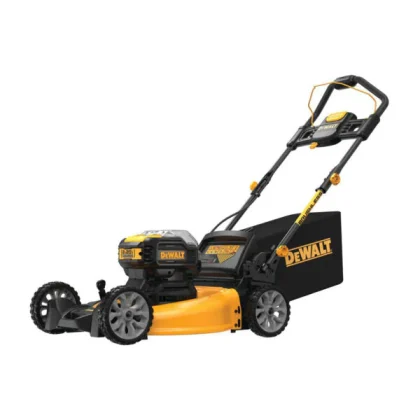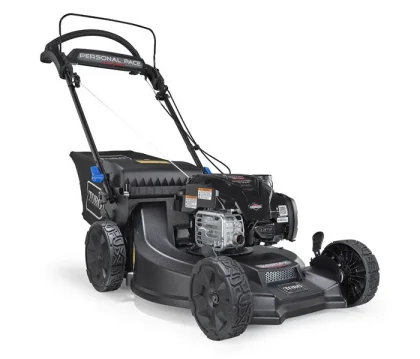

A riding mower can make weekly lawn care faster, but the wrong deck can create a frustrating routine. Riding mower deck size determines how much grass you cut in each pass, whether the mower fits through your gates, and how easily it follows the shape of your property. Bigger is not automatically better. The best choice is the deck width that matches your acreage, obstacles, storage space, and preferred mowing time.
For a clean purchase decision, start with your lawn’s usable mowing area. Then look at the narrowest gate, path, or shed opening the mower must pass through. A deck that saves 15 minutes on open grass is not a practical upgrade if it cannot reach the backyard.
What Riding Mower Deck Size Means
Deck size refers to the width of the mower’s cutting path, measured in inches. A 42-inch riding mower deck cuts a swath roughly 42 inches wide, while a 54-inch deck covers substantially more ground per pass. The deck does not always equal the mower’s full outside width, since tires, chute components, and the mower body can extend beyond it. Always check the complete product dimensions before ordering.
A wider deck usually reduces mowing time on large, open lawns. It may also require a larger engine, more storage room, and more care around landscaping. Narrower decks are easier to steer through tight spaces and around trees, garden beds, play areas, and fence lines.
Deck width also affects cut quality in real conditions. On smooth, level grass, a larger deck can be highly efficient. On rolling terrain or uneven ground, an extra-wide deck may scalp high spots or leave uncut strips when the deck cannot follow the contour evenly. This is why property layout matters as much as acreage.
Match Deck Width to Your Yard Size
There is no single acreage rule that fits every lawn, but these ranges offer a useful starting point for residential buyers.
30- to 36-inch decks: compact yards and narrow access
A 30- to 36-inch deck is a practical choice for lawns under about 1 acre, especially where gates, landscaping, and compact storage are priorities. These smaller riding mowers can be a smart step up from a walk-behind mower when you want a seated ride without adding an oversized machine to the garage.
Choose this range if your yard has narrow openings, closely spaced trees, or several landscape borders. You will make more passes than with a 42-inch model, but maneuverability can save time that would otherwise be spent trimming and backing up.
42-inch decks: the versatile residential choice
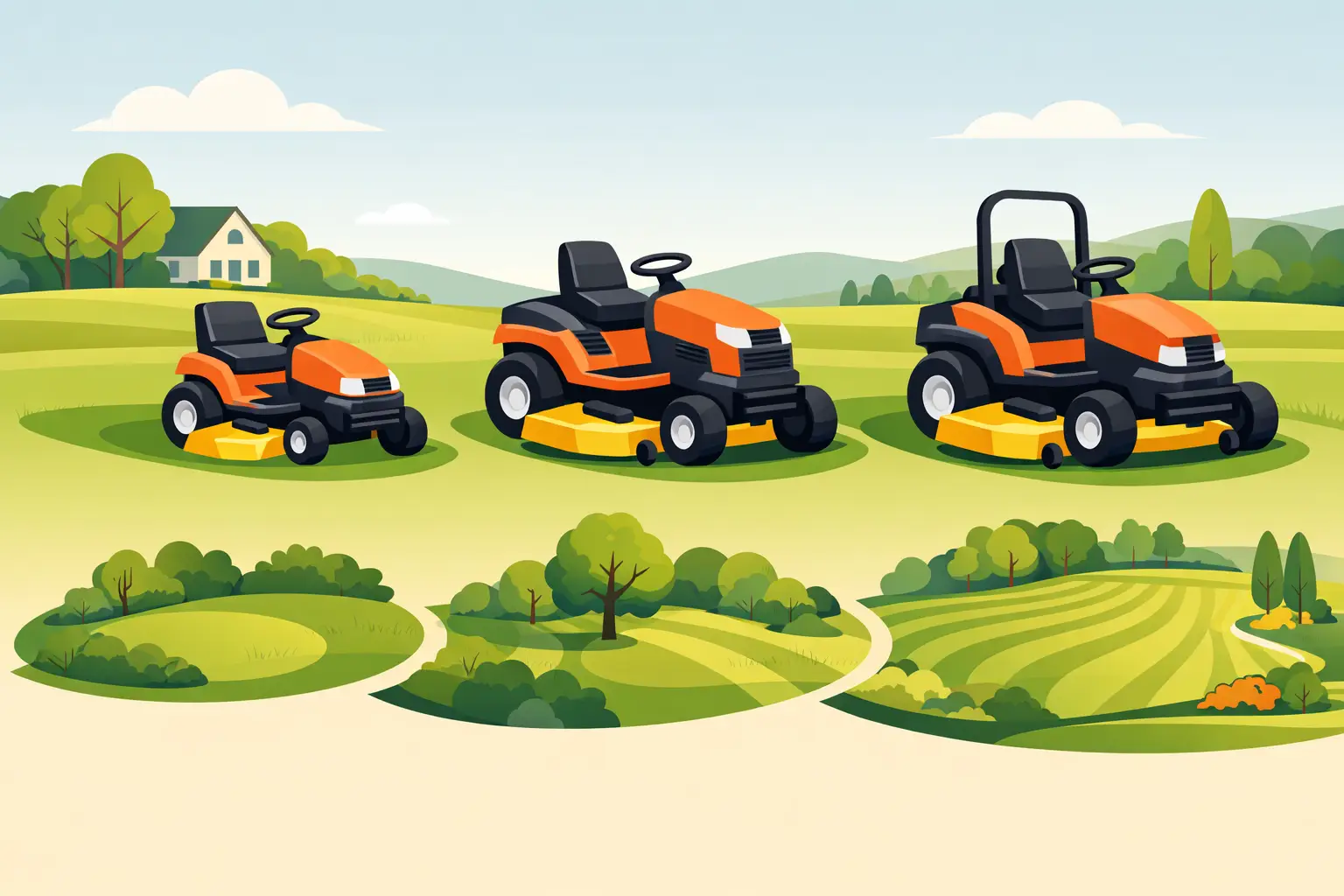
For many homeowners with around 1 to 2 acres, a 42-inch deck offers a strong balance of coverage and control. It is wide enough to noticeably shorten mowing time compared with a compact rider, yet manageable around common suburban obstacles.
A 42-inch deck is often a good fit for properties with a mix of open lawn and detailed areas. Before selecting one, measure gates carefully. A 42-inch cutting deck does not guarantee a 42-inch overall machine width.
46- to 48-inch decks: more coverage without going oversized
A 46- or 48-inch deck suits lawns around 1.5 to 3 acres when the terrain is reasonably open. This size can be an excellent middle ground for buyers who want to finish sooner but still need a mower that feels approachable near trees and curves.
If your lawn includes a few obstacles but has long, open stretches between them, this category deserves a close look. It is also a sensible option for shoppers who expect their lawn needs to grow after a move, landscaping project, or property expansion.
50- to 54-inch decks: larger residential properties
A 50- to 54-inch deck is designed for buyers with approximately 2 to 4 acres of mowable grass. On open ground, the difference in time can be significant. These models are popular for larger homesites, rural lots, and properties where mowing with a smaller deck feels like an all-afternoon project.
The trade-off is turning room. A larger deck needs more clearance around trees, sheds, and beds, and it can be less forgiving on uneven areas. If your property is mostly open and you have wide access points, this range can be a high-value choice.
60-inch and wider decks: open acreage and serious efficiency
A 60-inch deck is best for roughly 3 acres or more of open, regularly maintained lawn. It can cover a large area quickly, particularly on a zero-turn mower built for fast, precise turning. For buyers maintaining expansive grass with few tight obstacles, a 60-inch deck can turn mowing from a major weekly task into a more manageable job.
However, a wider deck is not ideal for every large property. If the acreage is broken into small sections by fencing, trees, slopes, or buildings, a 54-inch deck may be easier to use and may produce a better result. Measure access and consider the shape of the lawn, not just the number of acres on the listing.
Check These Measurements Before You Buy
Deck size is the headline specification, but it should not be your only measurement. Take a tape measure outside before adding a mower to your cart. Check your narrowest gate, the space between landscape features, and your storage entrance.
Also consider the route from storage to lawn. A mower may fit through a backyard gate but still be difficult to move around a parked vehicle, through a side yard, or onto a trailer. If you plan to transport it, confirm trailer width, ramp capacity, and tie-down space.
A useful rule is to leave several inches of clearance on each side of the mower’s total width. Tight fits make routine mowing slower and raise the risk of scraping fence posts, siding, or gate hardware.
Bigger Decks Save Time, but Not Always Money
The appeal of a wide deck is simple: fewer passes across the lawn. But the best value comes from choosing a mower that works efficiently on your exact property. A deck that is too large may force extra trimming around beds, require more careful handling, and cost more than a smaller option that fits the space better.
Engine power should rise appropriately with deck width and mowing conditions. Thick grass, wet spring growth, hills, bagging, and mulching all place more demand on the engine than dry, level turf. Do not compare deck size alone. Review horsepower or engine displacement, transmission type, blade configuration, cutting-height range, and whether the model supports mulching, bagging, or side discharge.
For properties with frequent turns and obstacles, a zero-turn mower can make a wider deck more useful because it reduces time lost at the end of each pass. For straightforward lawn care and familiar controls, a traditional riding lawn mower can be an excellent fit. The right platform depends on your comfort level, terrain, and mowing pattern.
Consider Terrain and Grass Conditions
Deck width changes how a mower behaves on slopes and uneven ground. A wider deck can bridge over dips and rise over uneven spots, which may lead to an inconsistent cut. Smaller decks tend to follow changing terrain more closely, though every mower has limits.
If your property includes slopes, prioritize safe operation over speed. Follow the mower manufacturer’s slope guidance, mow according to its recommendations, and avoid wet grass. For rough ground, look for a durable deck construction, adjustable cutting heights, and a mower sized for control rather than maximum coverage.
Grass type matters, too. Dense, fast-growing grass often benefits from enough engine power and a deck designed to move clippings effectively. Cutting too much height at once can leave clumps regardless of deck size. During peak growing season, mowing more frequently may improve results more than simply buying a wider mower.
Choose for the Lawn You Actually Mow
It is easy to shop by the largest deck available, especially when a sale price makes an upgrade tempting. Instead, picture a normal mowing day: opening the gate, turning around the maple tree, working along the fence, and parking the mower when the job is done. That practical view usually points to the right size.
At Friseuraesthetics Winsen, shoppers can compare riding and zero-turn mower specifications before choosing the deck width that fits their property. Look beyond the price tag, confirm dimensions and features, and select a mower you will feel comfortable using every week.
A properly sized deck should make your lawn routine feel shorter, cleaner, and easier to manage. Measure first, choose the width that clears your real-world obstacles, and let the mower work for your yard instead of asking your yard to work around the mower.